
As a supplier of flat woven labels, I've had the privilege of witnessing firsthand the various applications and benefits these labels bring to the table. In this blog, I'll delve into the cost - effectiveness of flat woven labels, exploring how they stack up against other types of labels in the market.
Understanding Flat Woven Labels
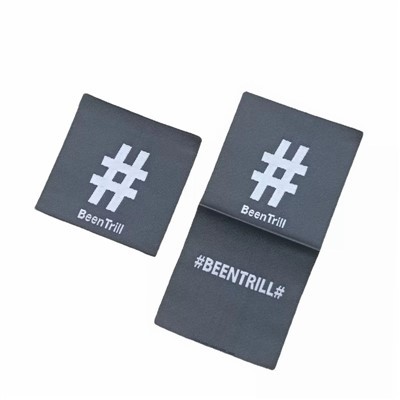
Flat woven labels are created through a weaving process that results in a flat, smooth surface. They are highly durable, with sharp and long - lasting designs. These labels can be customized with different colors, fonts, and graphics, making them suitable for a wide range of industries, from fashion to homeware.
Initial Cost
One of the first aspects to consider when evaluating cost - effectiveness is the initial cost of production. Flat woven labels generally have a relatively low setup cost compared to some other label types. The weaving machinery used to produce them is highly efficient, and once the design is programmed, the production process can be replicated with ease. This means that for large - scale orders, the per - unit cost of flat woven labels can be quite competitive.
In contrast, some other label types like printed labels may require expensive printing plates or digital printing setups, which can drive up the initial cost, especially for small - to - medium - sized orders. The flat weaving process, on the other hand, doesn't rely on such costly setup requirements, making it a more cost - friendly option from the start.
Durability and Longevity
Durability is a key factor in determining cost - effectiveness. Flat woven labels are known for their exceptional durability. The tightly woven fibers make them resistant to wear and tear, fading, and washing. This means that products with flat woven labels can maintain their branding and information integrity over a long period.


For example, in the fashion industry, clothing items often go through multiple washes. A flat woven label will retain its quality and appearance much better than a printed label, which may start to fade or peel after a few washes. This longevity reduces the need for frequent label replacements, ultimately saving money in the long run.
Customization and Branding
Flat woven labels offer a high degree of customization, which is crucial for effective branding. Brands can incorporate their logos, taglines, and other unique elements into the label design. This customization helps to create a distinct brand identity, which can lead to increased brand recognition and customer loyalty.
When a brand invests in a well - designed flat woven label, it is essentially making an investment in its long - term brand value. The ability to stand out in a crowded market can translate into higher sales and profits. Moreover, the cost of customizing flat woven labels is relatively reasonable, especially when compared to the potential return on investment from enhanced branding.
Comparison with Other Label Types
Let's compare flat woven labels with some other common label types.
Folded Woven Labels
Folded Woven Labels are another popular option in the market. While they offer a different aesthetic and can be used for specific applications, they generally have a higher production cost. The folding process adds an extra step to the manufacturing, which increases labor and material costs. Flat woven labels, with their simpler production process, can often be produced at a lower cost while still providing a high - quality look.
End Fold Woven Label
End Fold Woven Label is designed with a specific fold at the end, which can give a more finished look. However, this specialized folding also adds to the production complexity and cost. Flat woven labels, without the need for such complex folding, can be more cost - effective, especially for large - volume orders.
Mitre Fold Label
Mitre Fold Label is known for its unique mitered fold, which gives it a more sophisticated appearance. But similar to the other folded label types, the mitre fold adds to the production cost. Flat woven labels offer a cost - efficient alternative that can still provide a professional and attractive look for products.
Environmental Considerations
In today's market, environmental friendliness is also an important aspect of cost - effectiveness. Flat woven labels are often made from natural fibers such as cotton or polyester, which are recyclable and biodegradable. This not only aligns with the growing consumer demand for sustainable products but can also lead to cost savings in the long run.
Companies that use environmentally friendly labels may be eligible for certain incentives or may benefit from a positive brand image, which can translate into increased sales. Additionally, the long - term durability of flat woven labels means less waste generation from label replacements, further contributing to a more sustainable and cost - effective solution.
Conclusion
In conclusion, flat woven labels offer a high level of cost - effectiveness. Their low initial production cost, exceptional durability, high degree of customization, and environmental friendliness make them a smart choice for businesses across various industries.
If you're considering using flat woven labels for your products, I encourage you to reach out to discuss your specific needs. Whether you're a small startup looking to establish your brand or a large corporation aiming to enhance your product's appeal, flat woven labels can provide a cost - effective solution. Contact us to start a conversation about how we can help you with your label requirements.
References
- "Labeling and Branding in the Fashion Industry" - Fashion Business Journal
- "Cost - Benefit Analysis of Different Label Types" - Packaging and Labeling Research Institute
- "Sustainable Labeling Solutions" - Environmental Packaging Magazine